Finding Common Ground on AI in Utah
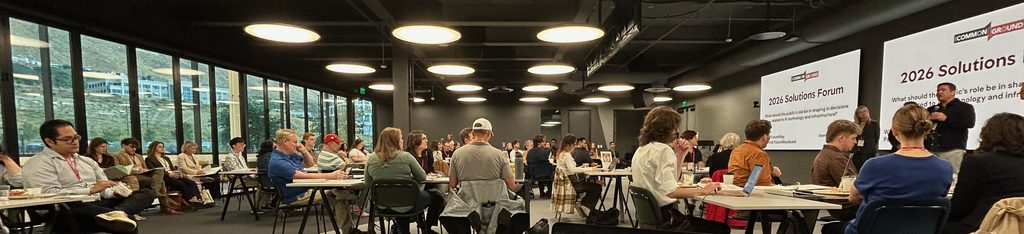
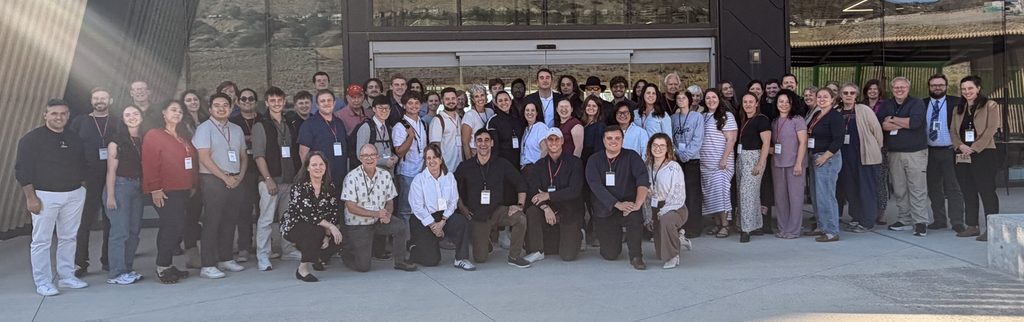
What happens when you put just under 40 Utahns in a room, 60/40 right-leaning to left-leaning, and ask them to figure out what role the public should have in government decisions about artificial intelligence? This fall, at the Utah Common Ground Solutions Forum, the answer was 10 recommendations, each endorsed by between 82% and 97% of the delegates.
It was a privilege to be part of this work alongside the BLOOM Project, which served as the technology and deliberation partner for Utah Common Ground (UCG). I advised Zabrae Valentine of BLOOM on weaving Rapid Sense-Making into the deliberative design, and led the sense-making team in the room.
Designing for a hard conversation
AI is moving fast, and so are the decisions being made about it: how state and local agencies use it, where hyperscale data centers get built, and who pays for the power and water they consume. Too often those decisions are settled before most residents know they are on the table.
UCG set out to change that. Its steering committee brought together Utah State University’s Center for Anticipatory Intelligence, the AI Ethics and Governance Institute, Braver Angels Utah, Engage Forum, and Mormon Women for Ethical Government. Delegates were recruited to be demographically representative of Cache, Salt Lake, and Utah Counties. To become an official UCG recommendation, a proposal had to win at least 75% support.
That is a high bar for a politically mixed group. Clearing it requires more than good facilitation. Delegates need to see, in real time, that they are being heard, and to see where their thinking already overlaps with people they might assume they disagree with. That is where Rapid Sense-Making comes in.
Sense-making in the room
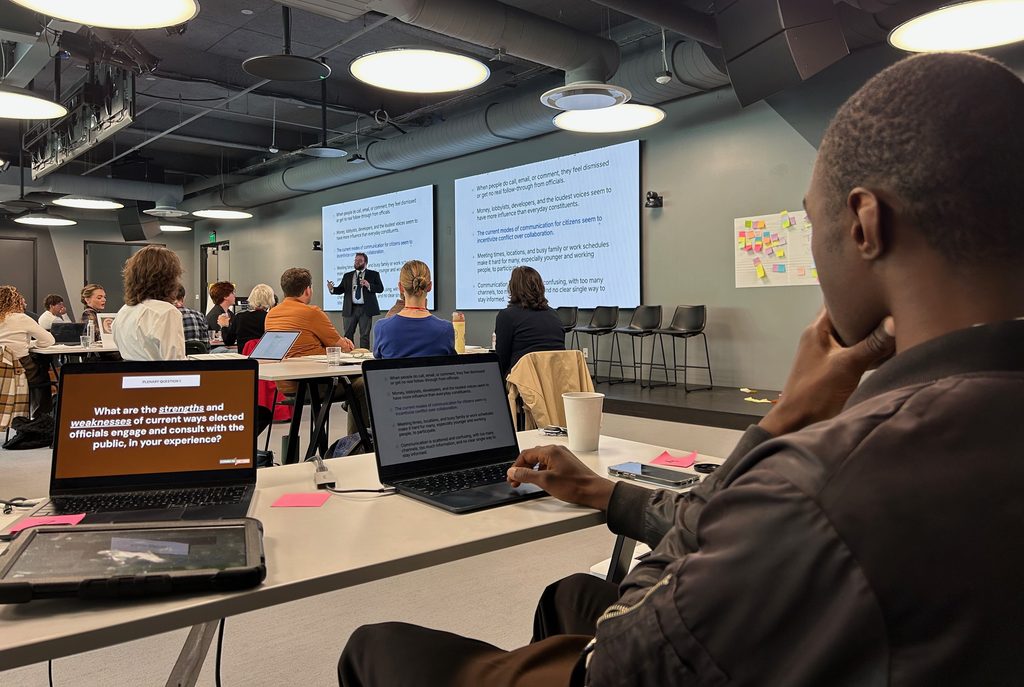
I have been doing real-time sense-making for a long time, from community conversations in Raymore, Missouri, where residents have helped shape the city’s strategic plan since 2016, to large AmericaSpeaks-style town meetings starting in 1998. The principle is always the same: capture what people actually say at their tables, find the themes across the whole room quickly, and reflect them back while the conversation is still alive.
In Utah, I worked with Humphrey Obuobi on the technology that made this possible: the Table Themer. As delegates discussed feedback on draft proposals in small groups, their input flowed to our sense-making team. The Table Themer helped us synthesize that input across every table into clear themes, which we reviewed and brought back to the groups drafting each proposal. That group then worked the suggestions in and came back with a refined draft.
What the delegates decided
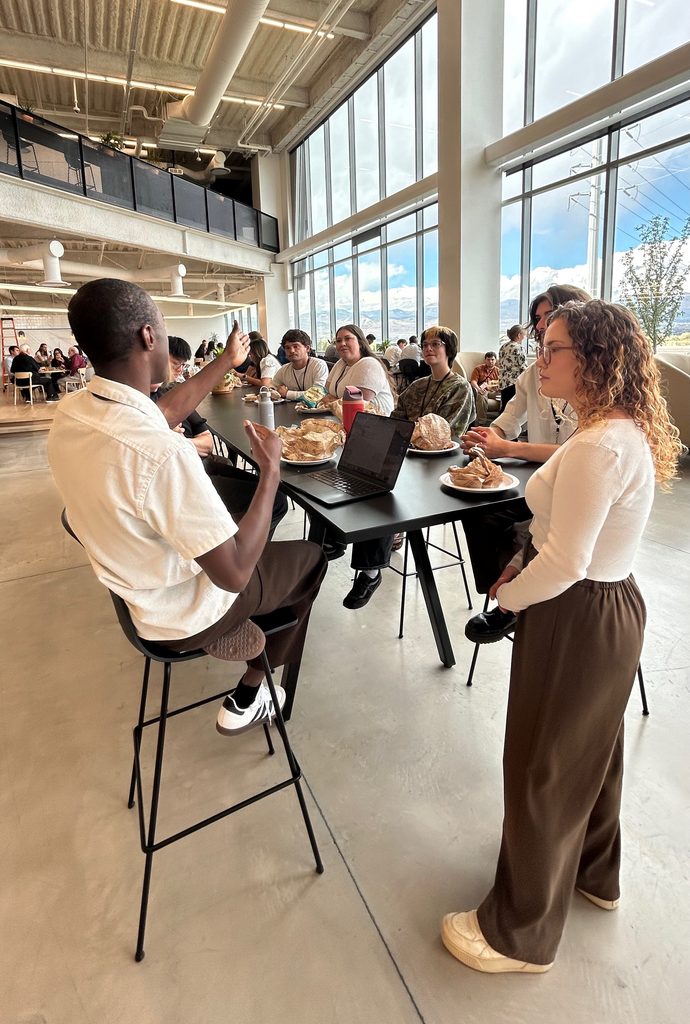
By the end of the forum, delegates had endorsed 10 recommendations, with support ranging from 82% to 97%. Taken together, they say:
- Decisions about AI should be more transparent.
- Utahns statewide should have a greater voice in those decisions, before they are final.
- Hyperscale data centers should face greater scrutiny of their environmental and economic impacts.
- Mechanisms should be in place to keep elected officials accountable to voters and taxpayers.
The tool does the heavy lifting of synthesis. People do the judgment. That balance matters. It let us move a room from divergent thinking to shared understanding without flattening the nuance of what delegates said. When people see and hear their own words reflected back, they trust the process, and they are more willing to build on someone else’s idea.
As Zabrae put it, if you had been in the room, the delegates “simply sounded like people who care about their community.” One delegate wrote afterward: “I can happily and proudly support our work product… I feel a rush of invigoration at what you’ve done here and made us a part of.”
The work did not stop at the forum. UCG is planning a legislative reception after the election to share the recommendations with state and local lawmakers, and several delegates are already pursuing recommendations that don’t require new legislation.
Read the full recommendations and the press release.
Bring this to your community
Utah was a proving ground. BLOOM is now building a Public Assembly on AI: a network of community-led assemblies where residents weigh the tradeoffs of AI and make decisions together about their shared future.
BLOOM’s 2027 cohort is recruiting Civic Hosts to lead their community’s conversation on AI. Selected hosts receive $10,000 to $60,000 in funding, along with tools and training, to run a community assembly in 2027.
A note on timing: applications for the 2027 cohort are due November 20, 2026. If you are reading this before then, there is still time, and I’d encourage you to apply. If you are reading this later, the deadline has passed, but the work is just getting started. Visit bloom-project.org to see what’s next, or get in touch. I’m glad to talk through what a process like this could look like where you live.
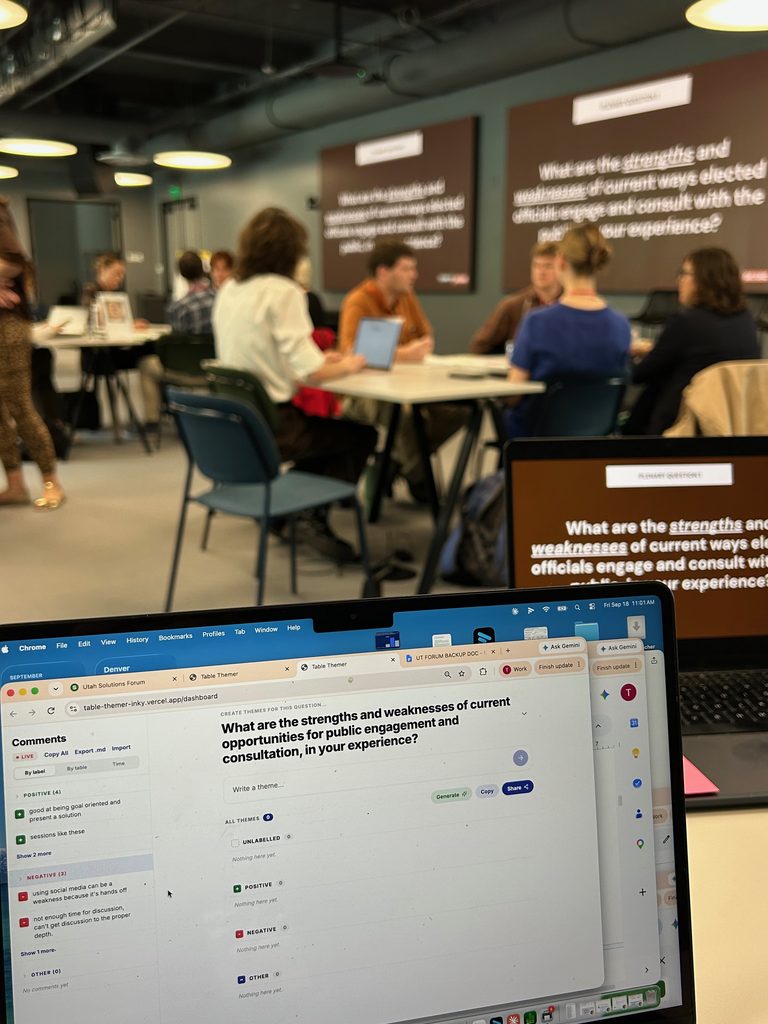
Table Themer and the Civic OS
One of the things I’m most excited about is getting the tools we used in Utah into more hands. We are working to make the Table Themer available to other communities soon as part of BLOOM’s Civic OS, a shared toolkit for running deliberative processes like this one. That means hosts won’t have to build real-time sense-making capacity from scratch. They’ll be able to capture what’s said at every table and reflect it back to the room, the same way we did in Utah.
Why I keep doing this
Outcomes like this don’t happen by accident. They come from intentional process design, skilled facilitation, and tools that help people find shared ground without losing what makes their views their own. When a room that leans 60/40 right-to-left walks out with recommendations backed by 82–97% of its members, it shows what’s possible when the process itself is trustworthy.
Thirty years in this field, and moments like this still remind me why I do it.
Thank you to Bloom Project team (Zabrae Valentine, Humphrey Obuobi, Rahmin Sarabi, Clara Long); Julie Rose, who facilitated; the Utah Common Ground Steering Committee; and every delegate who showed up and did the hard work.
Want to get started? Have a community conversation you can’t take on alone, or curious whether a Public Assembly on AI could work where you live? Let’s set up a call.