Answering an Attack on Democracy by Practicing It: Introducing Community Dialogue Partners
On July 20, 2002, 5,000 New Yorkers walked into the Jacob K. Javits Convention Center to do something that had never been attempted at that scale: sit down together, in the aftermath of 9/11, and decide as a community what should rise from Ground Zero. I was there, part of the AmericaSpeaks and Covision team that built the technology and process behind Listening to the City, linking citizens’ voices and priorities to the rebuilding of lower Manhattan. It remains, to this day, one of the largest town hall meeting ever held.
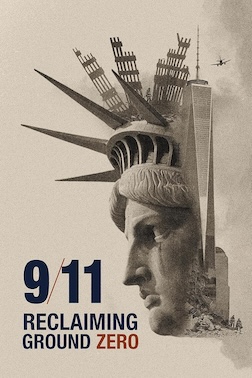
I’ve been thinking about that day a lot lately, because a new documentary is bringing it back into public view. 9/11: Reclaiming Ground Zero tells the story of how New Yorkers responded to an attack on democracy by practicing democracy: deliberately, publicly, and at a scale most people would have said was impossible. If you haven’t seen the trailer yet, it’s worth five minutes of your time.
What Actually Happened in That Room
The plans for Ground Zero at the time were, frankly, uninspired: office towers and retail space that treated the site like any other real estate development. Expectations for the meeting were low. Many people assumed 5,000 New Yorkers in one room, many of them grieving, would produce noise and discord, not consensus.
Instead, something remarkable unfolded. Small tables of participants, wired with real-time polling technology, worked through the proposed plans together, table by table, and their feedback was synthesized and reflected back to the whole room within minutes. By the end of the day, the verdict was unmistakable: the original plans didn’t meet the moment. Within a week, the Lower Manhattan Development Corporation announced the plans would be redrawn. What eventually rose from that site, the Memorial, the Museum, the green space, the way survivors and victims’ families were honored throughout, traces directly back to what was heard in that room.
It worked because the process was built to do one specific thing: let thousands of people with real disagreements listen to each other, think together, and arrive at something more than the sum of their individual opinions. That’s not a natural outcome of a large meeting. It has to be designed.
Why I’m Introducing Community Dialogue Partners
That work, designing the conditions for real collective sense-making, has been the center of my practice for over 30 years. And it’s why I’m genuinely excited to tell you about a new venture I’ve joined: Community Dialogue Partners.
CDP is a group of former AmericaSpeaks Associates, colleagues I’ve worked alongside for two decades, including David Campt, Bernardo Ferdman, Laura Gramling, Susanna Haas Lyons, Greg Keidan, Kim Sescoe, and William Zybach. We came together because we kept seeing the same thing: communities across the country facing complex, contentious challenges, and too few people with the skill and experience to design engagement processes equal to the moment. Public meetings too often become battlegrounds instead of forums for genuine dialogue. We know it doesn’t have to be that way, because we’ve watched it work: at Javits Center in 2002, and in the hundreds of engagements since.
CDP exists to bring that capacity, design, facilitation, and support for real deliberative democracy, to the complex challenges our communities are facing right now. Not nostalgia for what AmericaSpeaks built, but a refreshed, flexible version of it for today’s tools and today’s polarization.
Twenty-Five Years On, the Lesson Still Holds
What strikes me most, watching the documentary trailer and thinking back on that day, is how directly it answers a question a lot of people are asking right now: when things feel broken and divided, what do you actually do?
Listening to the City didn’t happen because New Yorkers agreed on everything. It happened because someone built a structure sturdy enough to hold real disagreement and still produce something the whole community could stand behind. That’s the whole premise of CDP: when you create the right conditions, communities can do this work themselves. Our job is to build those conditions.
You can now watch 9/11: Reclaiming Ground Zero from home; it’s available on Apple TV now, and streams free on Prime Video starting September 11. See all viewing options. And if you’re wrestling with how to bring your own community together around something hard, a contested local decision, a divided neighborhood, a planning process that’s stalled out, I’d love to talk with you about what’s possible.
Learn more about Community Dialogue Partners or get in touch to explore what this could look like for your community.